
Rainbow Mountain in Peru has rapidly gone from a hidden gem to one of the most popular day trips in South America. Honestly, it deserves the attention. It’s not hard to see why. The cascading, radiant colors of Vinicunca make it hard to believe it’s even a part of this world. Although the magnificent mountain and the scenic trail leading up to it are well worth the trip, a lot of people still underestimate how difficult and potentially rough the process of getting to the top actually is.
I made many mistakes on my visit to Rainbow Mountain and almost gave up within the first hour due to how much the altitude affected me. Although I’m not a hardcore trekker or much of a mountain enthusiast, I have done my fair share of treks and have taken on a number of dangerous hikes. None of them made me struggle more than Rainbow Mountain did.
Just a few hours from Cusco, trekkers taking on Machu Picchu almost feel compelled to take on Rainbow Mountain as well. That was my mindset, and I decided to attempt the hike just two days into my time in Cusco and two days before taking on a 5-day trek to Machu Picchu.
Big mistake.
I made quite a few big mistakes, and I’m sure I can’t have been the only one. Here’s a few things you need to know so you aren’t as hopelessly unprepared as I was.

This post contains affiliate links. That means that I may earn a commission if you make a purchase through these links.
First Off, How Are You Going To Get There?
Most likely, your entry point into Peru will be through Lima. You can fly from Lima to Cusco, which is the sensible decision if you’re on a strict schedule, but if you want to save money and see more of Peru along the way, Peru Hop is an option that you absolutely need to look into. Bus travel is going to be an inevitable part of any South American backpacking trip, but Peru Hop takes out a lot of the stress of getting from place to place. One of their more popular passes takes you from Lima to Cusco, taking you to Paracas (home to Islas Ballestas), the desert oasis of Huacachina, the Nazca Lines, Arequipa (Colca Canyon), and Puno (Lake Titicaca) for just $199. If you’ve got the time, I absolutely recommend using Peru Hop to make your journey to Cusco easier, safer, and a lot more fun.
Once you’re in Cusco, Rainbow Mountain is typically done as a day trip. Tour vans pick you up from your hostel at an ungodly hour — usually 3 to 4 AM — drive three hours to the trailhead, and you hike from there. Most people book through a tour agency in Cusco or online in advance. More on that in the cost section below.
Oh, and before you go…
It’s always a good idea to have travel insurance handy, especially in Peru’s cordilleras and jungles. My go-to is SafetyWing, with plans catering to adventurous backpackers and long-term digital nomads alike.
Accidents happen, and unplanned circumstances are almost inevitable when traveling. Maybe something can ruin your trip, but don’t let it ruin your life. From travel delays to scooter crashes, SafetyWing’s Essential Plan covers travel and medical emergencies, with add-on options for adventure sports and electronics theft.
Their plans start at just $2 a day — backpackers, rejoice — and Peru is among the 170+ countries that SafetyWing covers.
Booking Your Rainbow Mountain Tour: The Hidden Costs
This is the section that wasn’t really necessary when I first visited because Rainbow Mountain was still relatively under-the-radar. In 2026, the tour pricing landscape has become genuinely confusing and worth explaining clearly before you book anything.
Most advertised Rainbow Mountain tours from Cusco list prices between $25 and $75 USD. Here’s the catch: many of those headline prices don’t include the community entrance fee, breakfast, or sometimes even a bilingual guide. The community entrance fee at the gate is currently around S/25–30 for foreign visitors (approximately $7–9 USD), payable in cash and in Peruvian soles only. There are no ATMs on the mountain. There is also a separate fee for the Red Valley extension, usually around S/10.
A $30 tour could end up costing $45+ by the time you’re done. Always ask before booking: does the price include the entrance fee, breakfast, and a licensed bilingual guide?
Let’s Get One Thing Straight. Altitude Sickness Is Real
After one full day in Cusco without suffering any ill effects, I decided I’d gotten away with what many people warned me about. I was already skeptical about whether altitude sickness was even a real thing, so I didn’t really prepare. Before even starting the trek, I started feeling terrible. The 3 AM departure time followed by a several-hour drive through winding Peruvian mountain roads made me nauseous. Getting out of the cramped van and feeling the crisp mountain air did not do much to ease my lightheadedness.
Within thirty minutes of starting the hike, my entire group was struggling. We took our first break before we even got to the trailhead proper and the entire team crashed. Out of about fourteen of us, ten got horses right after that first break. My friends and I decided to push on, and I quickly fell behind. It felt like being drunk and hungover at the same time, like my eyes and brain were jiggling around in my head. My head was pounding. Even on minimal incline, I was out of breath every ten or fifteen steps.
I struggled horribly until I finally got a horse about two hours in. Even on horseback, the altitude sickness was destroying me. I legitimately do not remember the majority of the way up. I took photos I have no memory of taking. My facial expressions say it all.

The horse can’t take you all the way to the summit. You will have to hike the final section regardless. But it will save you significant energy and suffering on the lower sections of the trail. I passed my friends a bit later and the one who had altitude sickness the day earlier was doing completely fine. She was prepared and took every precaution and medication to try and combat altitude sickness. The other friend started getting affected by the altitude and got a horse shortly after.
Altitude sickness is not a joke and can completely ruin your day or week. Thankfully, Rainbow Mountain shocked my body into acclimatizing to the altitude which made my 5 day Machu Picchu trek almost a breeze. That was the only bright side to the whole ordeal. Altitude sickness affects people differently and in serious cases, it can lead to death. Do not push yourself if you think you might have altitude sickness. I did spend my rest day medicating and resting, which helped a bit. So how can you fight altitude sickness?
- Acclimatize properly — spend at least 2–3 days in Cusco (3,400m) before attempting Rainbow Mountain (5,036m). This is the single most effective thing you can do.
- Medication — visit any pharmacy in Cusco and ask for altitude medication. Acetazolamide (Diamox) is the main prescription option; discuss with a doctor before traveling.
- Coca leaves and coca tea — the local remedy and genuinely worth trying. Most people I’ve talked to say it helps. Even if it’s partly placebo, I enjoyed using them. Stock up at any market in Cusco.
- Hydrate aggressively — drink more water than you think you need, starting the day before the hike.
- Don’t drink alcohol — especially if you haven’t fully acclimatized.
Ready to brave the elements? Here are a few more things to take note of before heading out.
The Crowds Are Real
When I first visited Rainbow Mountain in 2016, it had just been discovered. The trail was quiet, the summit felt remote, and the whole experience had an element of genuine discovery. That version of Rainbow Mountain no longer exists. The trail now sees hundreds of visitors daily during peak season, and between roughly 9 AM and noon, when tour buses converge, it can feel uncomfortably crowded at the summit.
Unless you opt for a private tour and agree on a departure time even earlier than 3 AM, it’s hard to avoid. The trail has become that much more popular. There are a few alternative Rainbow Mountains to look into, with Palccoyo being the most popular alternative and Pallay Punchu starting to gain traction. I’ve been to all three, and they all have their pros and cons. At Pallay Punchu, my guide and I were the only ones there, which really made the experience unforgettable. If you can find an affordable tour for Pallay Punchu, I’d go for that one. Otherwise, Vinicunca is a classic, while Palccoyo — while still breathtaking — would be lowest priority.

The Weather Is Literally Insane
Never have I encountered a hailstorm and a snowstorm and gotten a sunburn in the same hour. Rainbow Mountain is a several-hour hike and the weather conditions can change dramatically throughout those few hours. It started freezing when we arrived in the early morning, heated up significantly by mid-hike, and then hit us with a hailstorm on the way down. The summit of Rainbow Mountain can be absolutely freezing or it can be so hot you burn within a few minutes. I was taking clothes off and putting them back on almost every few minutes.
I got sick for an entire week after Rainbow Mountain. My throat just didn’t work. I could only suck on candy or eat soup, which was not ideal when I had a 5-day Machu Picchu trek coming up. I got a cold, some altitude burn, and a bad bout of altitude sickness combined. I know I sound like a whiny little bitch right now but be thankful I’m being a whiny little bitch so you don’t have to be. Here’s how to maximize your enjoyment and minimize the suffering.
What To Wear and Bring
- Multiple layers — you will be adding and removing them constantly. A warm base layer, a mid layer, and a waterproof outer shell are the minimum.
- Waterproof jacket — non-negotiable. Hailstorms happen on clear-looking days.
- Sunscreen — UV radiation at 5,000 metres is extreme. Reapply constantly.
- Sunglasses — polarized lenses strongly recommended.
- Gloves and a warm hat — the summit can be genuinely freezing regardless of season.
- Trekking poles — rental available at the trailhead for a few dollars, worth every peso on the descent when your legs are shaking.
- Cash in soles — for the entrance fee, horse rental, toilet facilities, and any small purchases. No ATMs anywhere near the mountain.
- Snacks and water — more than you think you need.
Before setting off to trek in the magnificent mountains of Peru, staying connected is an essential. I use Saily eSIM to keep me online during my travels, ensuring that I have internet from the moment I land to the moment I leave. Figuring out directions, making travel plans with new hostel friends, ordering a ride, having an eSIM simply makes life that much easier on the road. Data packages for Peru start at just $6, and you can use my code “eli5” for an additional 10% off of your first Saily eSIM.
Don’t Drink The Night Before
Does it go without saying? Well, when I was 21, apparently not. If you’re a backpacker staying in Cusco, odds are, you’re staying at a party hostel. It’s pretty easy to get dragged in by loud music and people having fun, but please stay away if you’re doing Rainbow Mountain the next day. I had to wake up at 3 AM in order to have breakfast and arrive at the Rainbow Mountain trailhead right at around 7:30 AM. You’re going to struggle enough with a full night’s rest. Don’t make things even more difficult by staying up or pulling an all nighter.
Drinking in such high altitudes can also make things extremely difficult. If you haven’t spent enough time acclimatizing to the altitude, you shouldn’t even drink at all. I had a large beer my first night in Cusco and promptly felt terrible and passed out in my bed at 9PM. I made a lot of mistakes. Don’t be me.
You’re going to want Rainbow Mountain to be as memorable and dreamlike as possible, and unfortunately, you aren’t going to accomplish that by being hungover.
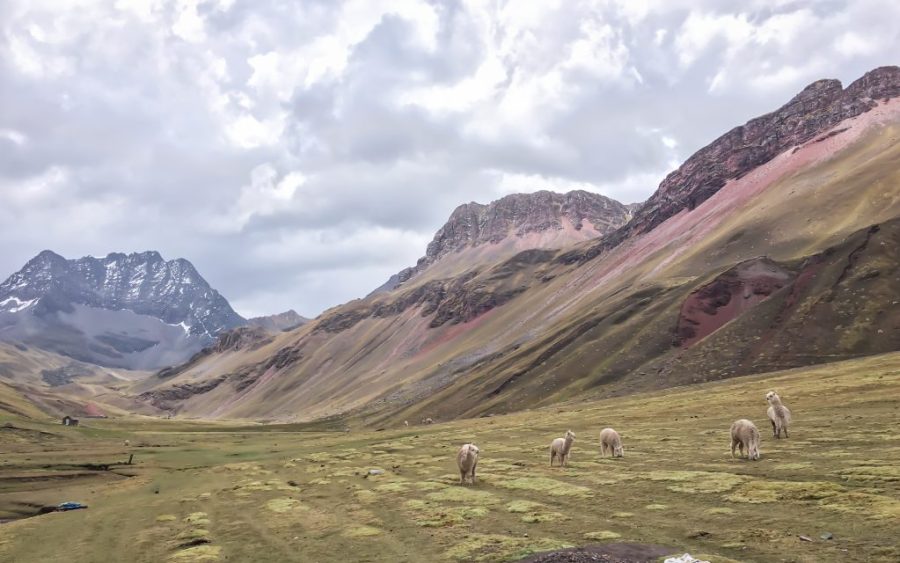
Rainbow Mountain Was Discovered Recently Due To Climate Change
I know this is a bummer but it is pretty hard for me to just ignore this aspect of Rainbow Mountain. For thousands of years, Rainbow Mountain was covered by layers of snow and ice until that recently melted, revealing the incredible colors lying underneath.
I encourage visiting Rainbow Mountain and the Vinicunca Region, but also encourage increased awareness to how climate change is changing things that have stayed the same for thousands of years. For every beautiful thing that climate change might reveal, there are thousands of other things that it destroys. From towering glaciers to animal habitats and populations, climate change is becoming impossible to ignore, and I implore you to at least keep its effects in mind when visiting Rainbow Mountain.
To end on a higher note…
Rainbow Mountain is one of the most breathtaking (literally) and magnificent sights I have ever seen. It is also one of the most difficult hikes I have ever completed. To sum it up, the altitude and weather conditions can really take its toll on you, but if you push through (even if you get a horse), it will be worth it in the end.
Reaching the summit and getting that 360-degree view of one of the most extraordinary regions South America has to offer is an otherworldly experience. The colors don’t look real even when you’re standing right in front of them. And the sense of accomplishment at reaching 5,036 metres — especially if altitude sickness tried its best to stop you — is something that stays with you.

If this post helped you out, show some love and support for the blog and help keep my adventures going by buying me a beer! My adventures are entirely self-funded, so any show of support is greatly appreciated, and allows me to keep writing helpful travel guides and creating travel content to help you all travel the world on a budget.
Click here for all posts on Cusco and Southern Peru
My Favorite Resources for Traveling
- Travel Insurance: SafetyWing
SafetyWing is my go-to travel medical insurance provider, keeping me covered for just a few dollars a day in over 180 countries around the world. They have various plans that are excellent fits for adventurous backpackers, long-term digital nomads, and everyone in between.
- Finding Accommodation: Hostelworld
Hostelworld is the only booking site backpackers should be using. They have the best inventory of hostels around the world, an easy to use interface, plus a revolutionary group chat feature that connects you with other travelers in your hostel and current city.
- Finding Volunteer Opportunities: Worldpackers
Looking to travel for free? Worldpackers has aggregated thousands of unique volunteer opportunities from all over the world. From working with wildlife in Africa to creating content while living on the Mediterranean, Worldpackers has much, much more than just the usual hostel volunteering gigs.
Click here to get $10 off your Worldpackers membership.
- Finding Unique Activities: GetYourGuide
While I prefer booking tours in person, GetYourGuide is an excellent tool for researching unique activities that you might not otherwise know about. Have found plenty of incredible gems on GetYourGuide and has made my life easier when I’m too lazy to head out to find a tour agency in person.
Thank you for the NOT sugar-coated account of your trip! Such honest stories are harder and harder to find these days!
I hiked this track in the end of March this year, and for me the whole experience was like a never-ending torture in all the seven circles of Dante’s Inferno!
I’ve just posted my at my own blog about it and here’s the link if anyone wants to compare experiences:
http://eyeswilltell.com/peru-rainbow-mountain/
But now, when it’s all over and in the past, I remember this day with a smile, as one of the worst ones in my life that, somehow, I am masochistically happy about!…
Wow Eli, interesting story and thank you for sharing it! The way you struggled your way up…you’re not the only one as you also see with iwonttell/eyeswilltell.
When you’re up there it’s absolutely astonishing, the view all over that place, but there are hundreds of people underestimating this altitude and have 3-4 hours of a horror trip. But you made it and the pictures you shared here are incredible 🙂 Thanks Eli!
Having did this trek in June 2017 I have to agree it was the hardest hike I’ve done. I just didn’t get that the altitude was affecting me. And was confused as to why my body just refused to work. However I pushed on and made the walk the whole way. I am so proud of myself for this. The sight at the end will stay with me fir life
haha yeah, I was also wondering how I was so tired after 10 minutes and the hike wasn’t even uphill at that point. Glad you pushed through!
For having done it recently, I can say that most of what you say is true ! Although I’ve been doing my fairshare of treks and been blessed to not being affected much by altitude sickness, I did the error of having a few beers the night before… I know not smart but hey, that’s Cusco nightlife for you ! Anyway, I was still smart enough to pack up on coca candies and some “altitude sickness” water, which really helped in the first hour which was HARD. But I pushed it through and managed to the top without a horse 🙂 Precious advices in this article anyway, stock up on altitude products guys they are life saviours ! Keep up the good work man 🙂
Rainbow Mountain shocked me into panicking and buying every altitude sickness thing out there to prepare for my Machu Picchu trek. Wish I took it seriously before Rainbow Mountain haha
What a place, I love it. Thanks for the advices, it’s on my bucket list.
I so feel your pain! I got altitude sickness in Utah at the Montage Hotel in Deer Valley, down for the count for three days! It is the worse! I’m afraid to do a trip like this because of that experience, so I will live vicariously through photos like yours 🙂
That sounds like a tough trek. I’m glad you shared your experience. Although you had a tough time I am sure the effort was worth it. You were rewarded with those stunning views.
We will definitely have to look into Rainbow mountain, and put it on our bucket list! Climate change is inevitably happening, too bad all of the changes can’t uncover beautiful mountains like this.
Rainbow Mountain is absolutely incredible! I can imagine the altitude sickness however; I too suffer from this, so thanks for the warning! Some great photos too.
This is such a perfect post for me, I’m planning a trip to Peru, so this post is very helpful, I’m gonna plan it better. Thanks a lot for sharing
The weather sounds crazy!! Also, i never thought altitude sickness was real until I experienced it on a trip to the Pamir highway. It is real and it does make you feel so shitty so i totally agree with taking a few days to get used to it. Nonetheless, the altitude sickness and crazy weather are all worth for the amazing views of the Rainbow Mountain.
I’m sure pictures don’t even do the mountain justice! Such a gorgeous sight. Thank you for the comprehensive guide! Can’t wait to visti.
The Rainbow Mountain is also on my list. Unfortunately I haven’t been to South America yet, but hopefully I will soon. Also thanks for the tips about sleeping early and the changing weather! That’s very helpful!
Wow, your journey sounded quite arduous but I appreciate your honesty about the trip. I’m not a hiker so I’m not sure I’d make the trek but it definitely is something I’d considered.
Such a useful guide! Totally didn’t know about the climate change and that it was only recently discovered!
As a hiker I would love to climb this but its totally amazing to see the colours of the ground like this. Is this the only place on Earth to see a mountain as colourful as this?
I think there are some in China that are pretty similar!
This mountains in Peru are so amazing, the colour of this place are something incredible. I still don’t believe it is true. You are true, the climate is changing too much and too fast. It give us to think about and change the way. It is not everything beautiful like this muntains.
Wow Eli, it was interesting to read about your Peru Adventure 🙂 The rainbow mountain is definetly on my “Bucket List”
Rainbow Mountain looks so amazing and stunning, I would love to travel there someday with my family. Thanks for your tips.