
Everyone dreams of going to South East Asia. The magical beaches, incredible food, and rich culture are a huge draw for anyone. From a budget standpoint, those beaches aren’t as far off as you’d imagine. If you are one of the many people who believe that money is the main factor holding you back, I’ve got some fantastic news for you. Traveling South East Asia on a budget is a breeze. I actually spend more money when I’m back home in the U.S. than when I am abroad in South East Asia.
There is a huge misconception surrounding the cost of travel. I blame all of those luxury travel Instagrammers that make you think you have to stay at 5-star resorts all the time. Travel doesn’t have to be expensive. It is actually way more affordable than most people expect. I’ve got budget travel in South East Asia down to the balance where I need it to be. You can keep costs low but still get to experience amazing things.
Here are ten of my top tips for traveling South East Asia on a budget.

Figure Out The Public Transportation ASAP
Once I figured out the public transportation system in Bangkok, I started falling in love with the city. I was no longer stuck in traffic all the time. I was able to go explore parts of the city that are off the tourist trail. Oh yeah, and I was saving a ton of money. If you don’t have a scooter, public transportation is the next best thing for budget travelers in Asia. You’d be surprised how efficient and modern the public transportation systems are in many major South East Asian cities. From Singapore to Bangkok to Kuala Lumpur, I was riding those trains as much as I could.
Even in less developed cities, figuring out the bus system or even just the specific route you need to take at that particular moment will save you some money. I paid around $2 for a 2-hour roundtrip bus to Kek Lok Si in Penang, which would have run me well over $20 if I chose to take a taxi.
Be sure to have a plan for staying connected while backpacking through South East Asia. I use Saily eSIM to keep me online during my travels, ensuring that I have internet from the moment I land to when I leave. It’s a game-changer for figuring out public transportation on the fly, coordinating plans with new hostel mates, or keeping family back home updated. Having an eSIM simply makes travel that much easier. eSIMs in South East Asia can start at just $3, and you can use my code “eli5” for an additional 5% off of your first Saily eSIM.
Going Somewhere? Hop on a Night Bus
Night buses give you the benefit of getting you somewhere and also serving as a place to sleep for the night. You won’t have to double up on accommodation after spending the entire day on the bus. Sure, buses aren’t always the most comfortable but you’d be surprised at how nice some sleeper buses in South East Asia are. A lot of them provide plenty of room and have the comfort of a first-class seat on a flight. Bring snacks, download some movies on Netflix, and take some sleeping pills if necessary. Bam, you’ve woken up at your destination.

Stay Hostels. I Promise There’s One Out There For You.
When I first started backpacking, picking a hostel was basically a crapshoot. Hostels had a 50/50 shot of being unforgettably amazing or flat-out terrible. Since those early years, backpacking culture has really taken off in a way I could have never imagined. Hostels have improved mightily in the past decade, especially in South East Asia. For the most part, hostels are no longer the grimy, greasy, drunk-infested hellholes that many people imagine them to be.
I’ve stayed at some incredibly nice hostels all over the world, including South East Asia. The stereotype is that hostels are only for young backpackers looking to get drunk. While that is true, especially with the Mad Monkeys and Slumber Party Hostels of South East Asia, there are different types of hostels for different types of travelers. I’ve found that with a little research, finding the right hostel for you is not hard. There are plenty of modern, quiet hostels that visited by all types of travelers, including those looking for peace and quiet.
Hostels are hands down the easiest way to save money while traveling. It may sound awful sharing a room with people but you’ll find that it really isn’t all that bad and what you lose in sleep, you will gain in friendship.
Learn How To Drive A Scooter

If you are brave and capable, a scooter is the best way to get around South East Asia on a budget. Of course, if this is out of your comfort zone, do not force yourself to navigate a scooter through Hanoi or Bangkok traffic. For the most part, I only rented motorbikes when I was in small, rural villages without public transportation. I rarely ever drove in the cities.
In some parts of South East Asia, a scooter can cost as little as $1 a day if you rent it long-term. In Bali, I had a scooter for the entire month and only paid $45. Gas was pretty cheap, and I can’t imagine I spent more than $10 for the month on gas. A lot of backpackers also choose to just buy a motorbike at the beginning of their trip and then sell it at the end. This is popular in countries with north-to-south routes or vice versa, like Vietnam.
Another perk of having a scooter is how liberating it is. You no longer have to wait around for taxis and you can go do things whenever you want rather than adhere to a tour’s schedule. Having a scooter absolutely improved my experience in a lot of places, and you can’t put a price tag on that.
Eat Locally. I’m Talking Markets, Street Food, Local Joints.

People often ignore the cost of food when planning a trip. It can add up quickly and unexpectedly. Aside from accommodation, food often ends up being the most expensive part of traveling. People don’t want to cook when they travel so they resort to eating out 2-3 times a day. Who can blame them? You’re on vacation, treat yo’ self.
However, you don’t always need to treat yourself. Eating at nice restaurants is fine every few days but if you want your money to last longer, stretch it out by eating at local joints. They won’t have the fanciest decor or most aesthetic meals but food is food. A lot of times, eating locally is also an awesome cultural experience. The night markets in Thailand, the warungs in Bali, the hawker centers in Singapore, the list goes on.
If you’re smart about it, spending $5 a day on food is very much within the realm of possibility. You’ll eventually get the hang of budgeting in South East Asia. If you want to stretch your money even further, maybe you can look into grocery shopping and cooking. If I know I’m going to be somewhere long-term, I definitely make sure to stop by a grocery store just to stock up on food so I don’t impulsively go out and spend $10 on meals whenever I’m hungry.
Step Up Your Haggling Skills

This could be important if you love to shop. I hate haggling and I used to be really bad at it. I still am pretty bad at it because sometimes I’ll start haggling just for fun and then end up buying something I don’t even want just because I thought I got a good price on it. If you’re on a mission for souvenirs or cool little knickknacks, your haggling has got to be on point.
A general rule of thumb is to think about what price you actually want to pay for it and then go significantly below it but not too low that you offend the vendor. For example, if something costs $20 and you only want to pay $15, offer $10 and meet them halfway.
Again, remember that you are a guest in their country and your money goes a lot further. Do you really need to haggle an extra 10 cents off a bottle of water or a tuk-tuk ride? Getting scammed is annoying but haggling should not come with the mental cost of your enjoyment. I’ve traveled with some people who would spend an entire day pissed off about paying a little more money for a taxi ride, or boasting about how they got the local price on something. If you can afford roundtrip flights to Thailand, you can let $2 slide without having it ruin your day. Haggle, but within reason.
Try To Find Work Online
In this digital age, finding work online is easier than ever. There’s a reason why there has been a digital nomad explosion. Many people can run businesses remotely, sell their services online, or even find work with their skills wherever they travel. There are plenty of companies that make it easy for travelers to connect with businesses abroad for opportunities.
WorkAway is a popular one that I’ve had friends use. Fiverr lets creatives sell their skills online, ranging from graphic design to anything you can think of. For more ideas, you can check out my list of five extra ways that I earn money online!
Exchange Your Skills For Free Stays

Kind of on a similar wavelength, using your skills or assets in exchange for free stays is one way people can bring expenses down. This is another thing I could write an entire lengthy post about, but in short, it is not as hard as everyone thinks it is.
Sometimes all it takes is asking. I do this pretty often and although people assume it is limited mostly to bloggers, influencers, journalists, or photographers, there really are no restrictions. I’ve met people from artists to musicians to fire-spinners that have gotten free stays everywhere they go in exchange for painting a wall or putting on a show. Whatever your passion or hobby is, there is likely an opportunity for you to utilize it in exchange for free stays or even getting paid. Being able to market yourself professionally is almost as important as the skill itself.
Looking to travel for free? Worldpackers has aggregated thousands of unique volunteer opportunities from all over the world. From working with wildlife in Africa to creating content while living on the Mediterranean, Worldpackers has much, much more than just the usual hostel volunteering gigs.
Click here to get $10 off your Worldpackers membership.
Limit Your Nights Out
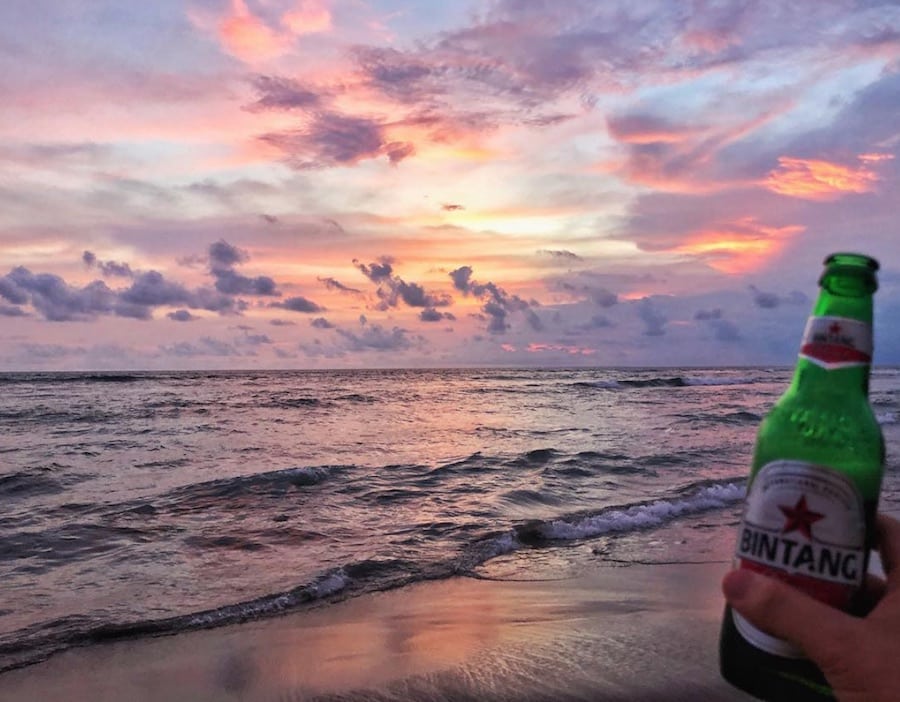
What’s this? ~ The Partying Traveler ~ suggesting that you shouldn’t drink? Lately, I’ve started opting for quality over quantity. If you caught me at my early stages of backpacking, you would almost always find me with a beer in my hand. As I’ve started growing into my own unique style of travel, I’ve learned to start gauging the “fun potential” of a night before I start drinking. If it seems like everybody is ready for a crazy night out, then I will shamelessly succumb to peer pressure and down five tequila shots in twelve seconds. If it seems like a chill kickback is all that’s in store, then maybe I’ll sub in the beers for a water.
You’ll save money this way and you won’t end up being as fat as me after a couple of years of traveling. I never realized how much “cheap alcohol” actually cost me until I started being more selective about my nights out.

Make Friends!
The more people you hang around with, the cheaper things get. You can split taxis, private rooms, meals, alcohol, and so on. Oh yeah, the joy of friendship is cool, too.
South East Asia is one of my favorite regions of the world that I have been to, if not my favorite. It is a part of the world that everyone should experience. Many of my friends dream of going to places like Thailand or Bali or the Philippines but have the misconception that a trip there would be too expensive. Budget travel in South East Asia is very attainable. Stepping a little bit out of your comfort zone will go a long way, for your wallet and for your life. Traveling isn’t always glamorous but every moment will be an adventure.
If this post helped you out, show some love and support for the blog and help keep my adventures going by buying me a beer! My adventures are entirely self-funded, so any show of support is greatly appreciated, and allows me to keep writing helpful travel guides and creating travel content to help you all travel the world on a budget.